
The ancient wisdom of Pythagoras—and the Stoic truth most people discover only after life breaks them
🎻 Music Credit: “It Is Up To You” by Embers To Stars (Daniel Carleo) — whose masterful cinematic soundscape elevates the message with depth, gravity, and reverence.
“Learn silence. With the quiet serenity of a meditative mind, listen, absorb, transcribe, and transform.” ~ Pythagoras
There is a skill almost no one practices anymore.
It is not productivity.
It is not intelligence.
It is not ambition.
It is silence.
Not the absence of sound—
but the presence of awareness.
In a world addicted to noise, silence has become a lost discipline.
We react instantly.
We post opinions before reflection.
We scroll through thousands of voices while never hearing our own.
But more than two thousand years ago, a Greek philosopher quietly offered a different instruction.
Learn silence.
Because without silence, transformation is impossible.
The Problem Most People Never Notice
Most people believe their suffering comes from circumstances.
A difficult boss.
A failing relationship.
An unfair system.
A painful past.
And sometimes those things are real.
But if you watch closely, something strange becomes clear.
Two people can experience the same event and leave with completely different lives.
One becomes bitter.
The other becomes wiser.
One collapses.
The other grows stronger.
The event was the same.
The difference was interpretation.
This insight sits at the heart of Stoicism and spiritual philosophy alike:
What disturbs us is rarely the event itself—
but the meaning we attach to it.
In It Is Up To YOU: A Journey of Stoic Spirituality, this idea becomes the central turning point: the real battle of life is not outside us, but inside the mind that interprets reality.
But you cannot change your interpretations if you are never still long enough to see them.
That is why silence matters.
The Space Where Freedom Lives
Most reactions feel automatic.
Someone criticizes you.
You defend yourself.
Something goes wrong.
You panic.
Someone disappoints you.
You replay the pain for weeks.
But if you slow down—just slightly—you will notice something.
There is a tiny space between what happens and how you respond.
A pause.
Barely noticeable.
But inside that pause lives freedom.
Viktor Frankl described it this way:
Between stimulus and response there is a space. In that space is our power to choose our response.
The Stoics called it the domain of judgment.
Spiritual traditions call it awareness.
Your entire life is shaped by what you do in that space.
And silence is what allows you to see it.
The Hardest Truth Most People Avoid
At some point in life, everyone reaches the same realization.
It might come in a hospital waiting room.
Or during a divorce.
Or in the quiet moment after a failure you cannot blame on anyone else.
The realization is simple.
And terrifying.
No one is coming to live your life for you.
No philosophy.
No mentor.
No perfect set of circumstances.
At some point, responsibility returns to the only place it has ever truly lived—your own mind and choices.
The opening pages of It Is Up To YOU describe this moment clearly: the turning point in life occurs when you stop waiting for the world to change first and begin changing how you meet it.
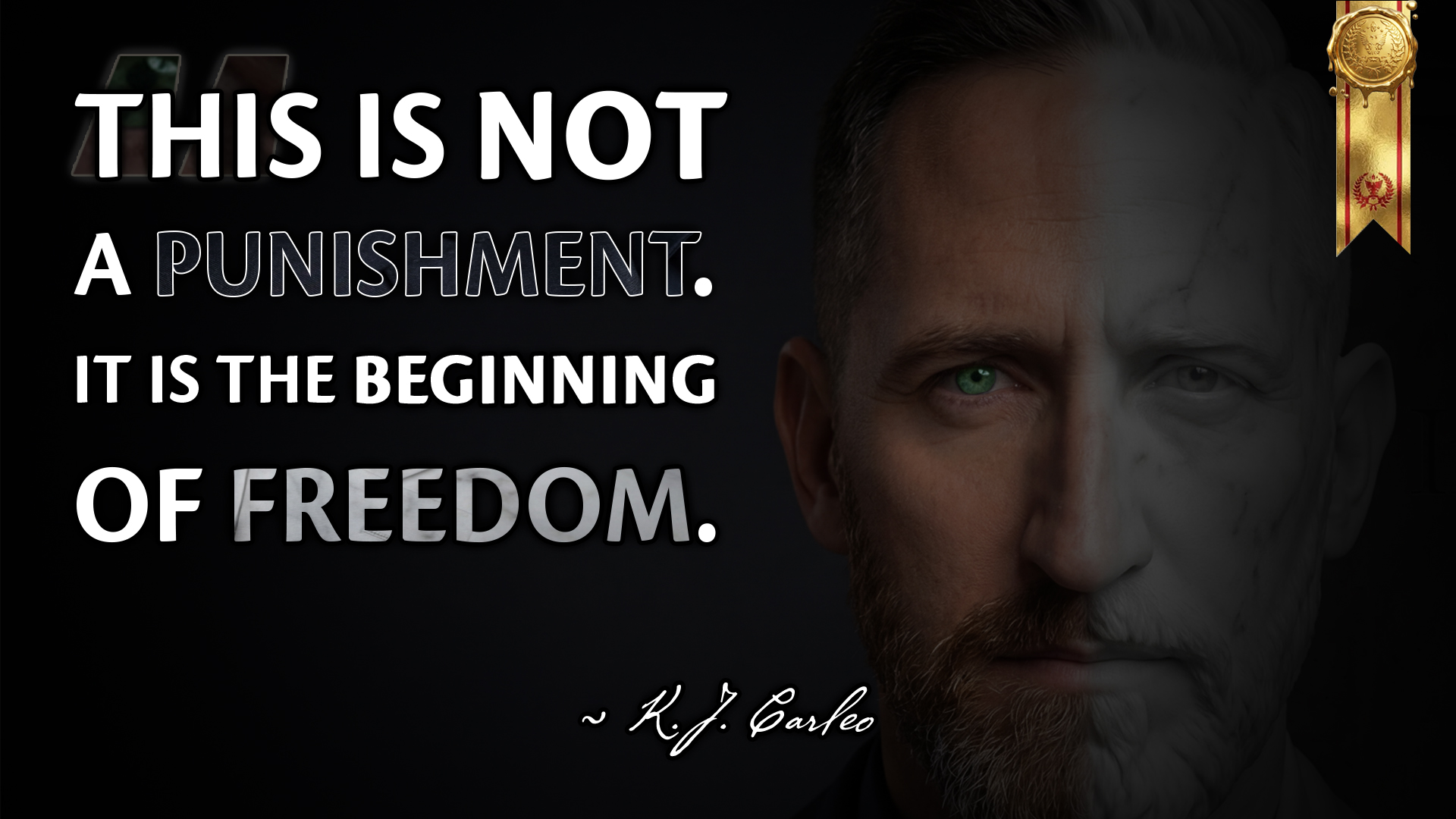
This is not a punishment.
It is the beginning of freedom.
Why Silence Changes Everything
Silence does something extraordinary.
It slows down the machinery of reaction.
When you sit quietly—even for a few minutes—you begin to notice things you usually miss.
You see the stories your mind tells about other people.
You notice how quickly anger rises.
You observe the fears that quietly shape your decisions.
And once you see them…
you are no longer completely controlled by them.
A new possibility appears.
Instead of reacting automatically, you can choose deliberately.
That small shift is the beginning of transformation.
The Discipline of Becoming
Transformation rarely arrives as a single dramatic moment.
It arrives as small choices repeated over time.
A pause before responding.
A breath instead of an argument.
A moment of compassion instead of resentment.
That is why It Is Up To YOU is structured as 365 meditations—one for each day of the year.
Because real change comes through daily practice, not inspiration alone.
One reflection.
One pause.
One deliberate response.
Day after day.
Eventually the mind begins to change.
The reactions soften.
The judgments loosen.
And life begins to feel less like chaos and more like participation.
Silence Is Not Escape
Many people think reflection is passive.
They imagine philosophy as something separate from real life.
But the Stoics practiced silence for the opposite reason.
Not to escape the world.
But to face it more clearly.
Marcus Aurelius wrote his reflections while governing an empire during war and plague.
He practiced inner stillness not because life was calm—
but because it wasn’t.
Silence was his training ground.
It sharpened judgment.
It steadied emotion.
It allowed him to act without being ruled by impulse.
Silence does not weaken action.
It refines it.
The Life That Follows
If you practice silence long enough, something surprising begins to happen.
Certain things stop disturbing you the way they once did.
You no longer feel the need to win every argument.
You stop chasing approval.
You stop replaying old resentments.
The world may remain chaotic.
But your mind becomes steadier inside it.
The Stoics called this inner freedom.
Spiritual traditions call it peace.
But both point to the same discovery:
Life changes the moment you realize your mind is trainable.
The Invitation
Pythagoras did not teach silence so people could withdraw from the world.
He taught it so they could transform within it.
Listen.
Absorb.
Transcribe.
Transform.
Silence first.
Then wisdom.
Then action.
And eventually, a different life.
Because beneath all philosophy and spirituality lies a single confronting truth:
Your life begins to change the moment you stop waiting for someone else to change it.
In the most liberating sense possible—
It is up to you.
Author’s Note
This reflection draws from ideas explored in It Is Up To YOU: A Journey of Stoic Spirituality, a year-long meditation practice blending Stoic philosophy with spiritual introspection. The book invites readers to train the mind through daily reflection, learning to transform perception, responsibility, and inner peace one decision at a time.
If something in these words stirred a quiet recognition in you, then the work has already begun. The reflections above are only a doorway into a deeper practice explored throughout It Is Up To YOU: A Journey of Stoic Spirituality—a year-long path of daily meditations designed to train the mind toward clarity, responsibility, and peace. Each page is meant not simply to be read, but lived with, one day at a time, as a companion for the moments when life asks who you are willing to become next.

It Is Up To You
“It Is Up To YOU” combines the practical wisdom of Marcus Aurelius’ “Meditations” with the spiritual insights of “A Course in Miracles” by Helen Schucman. The book explores the convergence of Stoic philosophy and modern spiritual thought, creating a guide for inner peace and personal transformation.
