
Loneliness, Light, and the Courage to Carry Love Anyway
🎻 Music Credit: “Poe” by Embers To Stars (Daniel Carleo) — whose masterful cinematic soundscape elevates the message with depth, gravity, and reverence.
“And all I loved, I loved alone.” ~ Edgar Allan Poe
There is a particular ache in those words.
Not the ache of being unloved.
The ache of loving deeply… and feeling no one quite meets you there.
When I first sat with that line from Poe, it didn’t feel dramatic. It felt familiar.
The Ache
There is a kind of loneliness that does not come from the absence of people. It comes from the presence of depth. You love with intensity. You see beauty others overlook. You carry meaning where others carry convenience. And sometimes, in that depth, you stand alone.
Poe’s confession is not only about romance. It is about being internally lit in a world that often lives externally distracted.
Loneliness sharpens the edges of love. It makes you aware of how much you feel. And when that feeling isn’t mirrored, it can start to feel like a burden instead of a gift.
But here is what I’ve learned.
Loving alone is not the same thing as loving wrongly.
In Cast Your Light, I wrote that the light you carry is not validated by who gathers around it. A candle does not ask the dark for permission to burn. It simply burns. The problem is not that your love exists in solitude; the problem is when you interpret that solitude as a verdict against you.
Poe loved alone. But he still loved.
That matters.
There were seasons in my life where I felt that same isolation. Loving fiercely. Believing deeply. Caring in ways that weren’t always reciprocated or even understood. It can tempt you toward one of two extremes:
Close your heart.
Or shrink your depth.
Neither is the way.
In The Goodest Boys, I wrote about a kind of love that asks nothing in return. The kind that sits beside you in silence and somehow says everything. Lincoln did not mirror my complexity. He did not analyze my wounds. He simply stayed. And in that staying, I realized something profound:
Love does not become less sacred when it is not echoed loudly. Sometimes it becomes purer.
The Refining Fire
Loneliness does something refining. It strips love of performance. When you love and no one applauds, you find out whether you were loving for connection or for confirmation.
And yet, we are not meant to live in isolation forever.
This is where the next layer unfolds.
In It Is Up To You, I wrote in the Preface that no teacher, no doctrine, no circumstance could walk my path for me. The turning point was not outside. It was in here. The mind. The interpretation. The response.
Poe’s line can be read as tragedy.
Or it can be read as sovereignty.
“And all I loved, I loved alone.”
What if that is not a complaint, but a recognition?
You are responsible for the way you love.
You are responsible for whether you keep your heart open.
You are responsible for whether loneliness turns you bitter or deep.
The world may not always meet your intensity.
But your intensity is not a mistake.
Stoicism teaches that we cannot control how others respond. We can only govern our judgments. Spirituality teaches that love itself is the higher alignment. When you weave those together, something powerful happens:
You stop waiting for your love to be validated before you allow yourself to embody it.
Loneliness then becomes a refining fire instead of a sentence.
You begin to see that loving alone does not mean being unseen by God. It does not mean being misunderstood by eternity. It does not mean your depth is wasted.
It means you are training your inner authority. You are building your inner kingdom.
It means your love is no longer hostage to reciprocation.
And in that freedom, something shifts.
Because when you stop loving to be matched…you begin loving from alignment.
There is a sacred pause between feeling alone and deciding what that aloneness means.
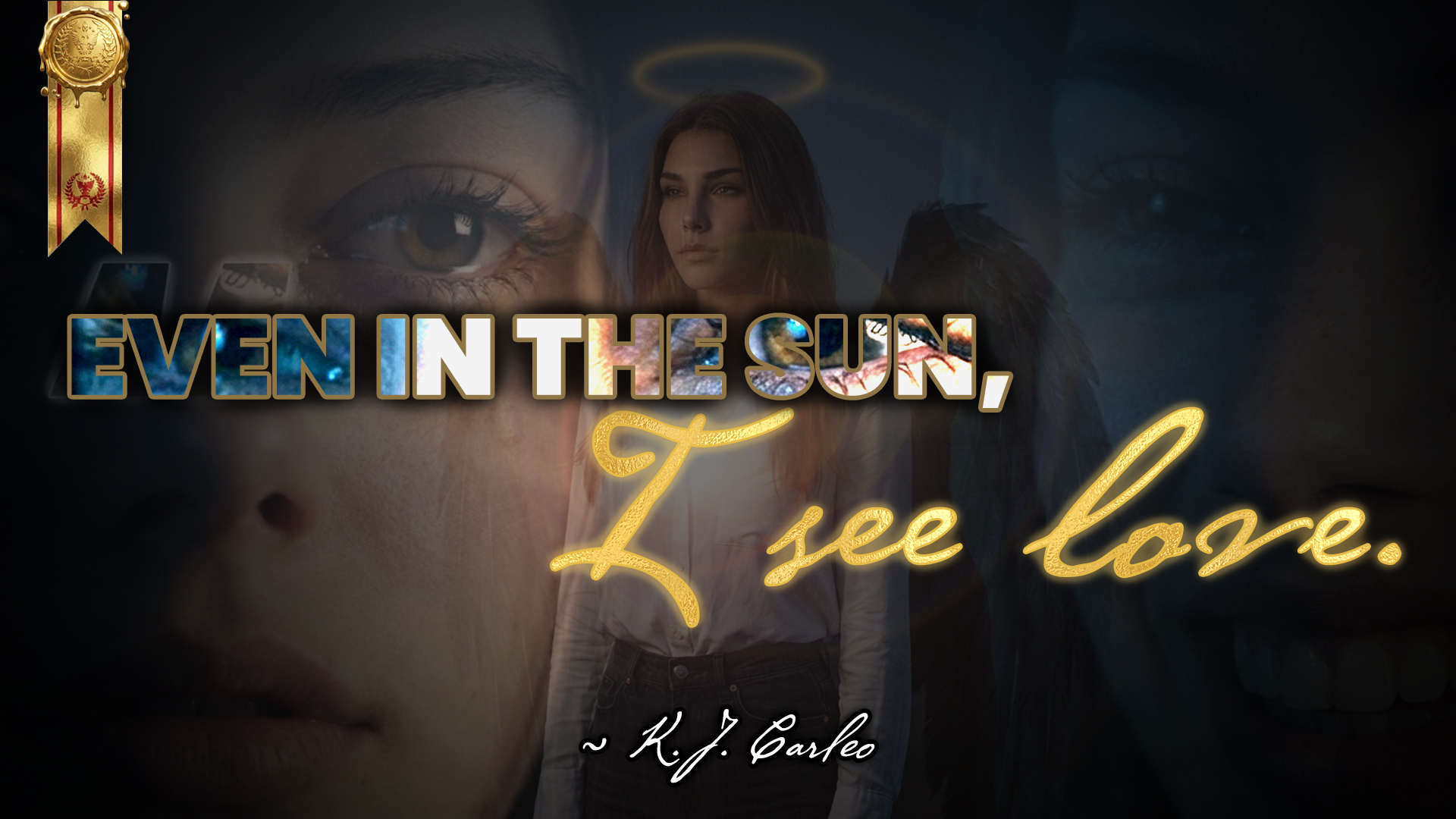
“Even in the sun, I see love. It provides us with heat and light energy that helps sustain our planet – and our lives. Unconditionally, unyieldingly, uncontrollably. For all this, it requests nor expects anything in return; absolutely nothing – now that, is love.” ~ KJ Carleo
That pause is everything.
In that space, you can say:
“This loneliness proves I am unworthy.”
Or you can say:
“This loneliness is sharpening me.”
You can decide that depth isolates you.
Or you can decide that depth prepares you.
It is up to you.
The Turning Point
What Poe felt, many of us have felt. The intensity of private devotion. The ache of private longing. The beauty of private perception. But the story does not end there unless you decide it does.
The light you carry may not always be met immediately. But that does not mean it will never be met.
And even if it isn’t, your responsibility remains the same:
Love anyway.
Grow anyway.
Choose clarity anyway.
The world does not disturb us; only our judgments do. And with a single decision for love, every judgment can be undone.
Loneliness can either harden your heart or hollow it out so light can pass through.
Choose the second.
Because the deepest truth I know is this:
You were never meant to dim your love to feel less alone. You are not meant to dim your light in fear of blinding others, either.
You were meant to deepen your courage so you could carry it well.
And when you do, something remarkable happens.
You realize you were never loving alone.
You were loving from within.
Author’s Note
If Poe’s words unsettled you, good.
That ache you feel reading “And all I loved, I loved alone” is not weakness. It is recognition. It is the sound of your own depth answering back.
I want to leave you with something unmistakable.
If you have ever felt alone in your love…
If you have ever been the one who cared more, stayed longer, felt deeper…
If you have ever wondered whether your intensity is too much for this world—
Hear me clearly:
Your depth is not the problem.
Your unwillingness to abandon it is your power.
But here is the part most people don’t say.
Loneliness will test whether you love for applause or for alignment.
It will strip you of audience.
It will remove the echo.
It will force you to ask: Who am I when no one is mirroring me?
And that is where your real life begins.
You can close.
You can numb.
You can decide the world is shallow and you are misunderstood.
Or you can do something braver.
You can refine.
You can train your mind not to interpret solitude as rejection.
You can discipline your heart not to equate silence with insignificance.
You can decide that your love will not be conditional upon being met.
That decision—quiet, internal, unannounced—changes everything.
It is the same thread that runs through Cast Your Light:
Shine because it is who you are, not because someone claps.
It is the same truth that shaped The Goodest Boys:
Love fully, even when it cannot be returned in equal language.
And it is the core of It Is Up To You:
No one can live your depth for you. No one can guard your heart for you. No one can decide what your loneliness means but you.
If you are loving alone right now, let this be your turning point:
Do not shrink.
Do not harden.
Do not retreat into smallness just to feel accompanied.
Grow larger instead.
Let your solitude make you clearer.
Let it make you intentional.
Let it train you in inner authority.
Because here is what I know after years of walking this path:
The person who learns to love well in solitude becomes unshakeable in connection.
And when you finally meet those who can stand at your depth—
and you will—
you will not be desperate.
You will be steady.
You will not be begging to be understood.
You will be whole.
So if you leave this page with one thing, let it be this:
Do not measure your love by how many hold it.
Measure it by how faithfully you carry it.
Love well.
Grow deep.
Choose your interpretation wisely.
It is, and always has been, up to you.

Cast Your Light
Cast Your Light is a powerful guide to stepping into your greatest self. Blending timeless wisdom from ancient philosophers with modern insight, it challenges you to overcome adversity, embrace your inner strength, and take that decisive 30-inch step toward real transformation.

It Is Up To You
“It Is Up To YOU” combines the practical wisdom of Marcus Aurelius’ “Meditations” with the spiritual insights of “A Course in Miracles” by Helen Schucman. The book explores the convergence of Stoic philosophy and modern spiritual thought, creating a guide for inner peace and personal transformation.
