~ An Excerpt From “The Goodest Boys”, Chapter 6: “The One Who Was Already Named”
🎻 Music Credit: “I Never Left” by Embers To Stars (Daniel Carleo) — whose masterful cinematic soundscape elevates the message with depth, gravity, and reverence.
I tell people now that I was looking for a dog.
That’s the version that sounds reasonable.
The truth is harder to explain without being misunderstood, so I rarely lead with it. But honesty demands accuracy, and accuracy demands this: I was heartbroken, and I was trying to replace Lincoln. I didn’t yet have better language for what I was doing—only the ache that drove it.
I searched relentlessly. I told myself it was practical. That I needed companionship. That the house felt wrong without a dog in it. All of that was true, but none of it was the reason.
Something in me needed release.
I remember Googling breeds late one night, circling back again and again to what I already knew. Goldador. The word itself felt like a bridge—familiar enough to feel safe, different enough to justify movement. I wasn’t browsing casually. I was searching with urgency, as if I were trying to catch up to something already in motion.
And then I saw him.
Not in person. Not yet.
Just a picture.
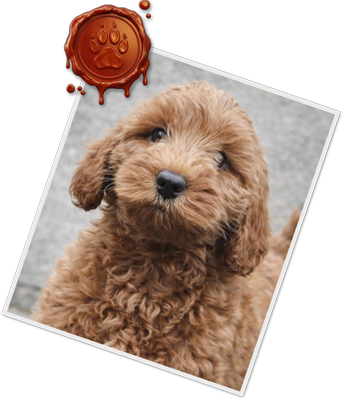
I don’t remember the details of the page or the path that brought it to my screen. I only remember the moment my body reacted before my mind could intervene. There was no hesitation. No internal debate. No careful reasoning.
Out loud—confidently, unmistakably—I said, “That is Caesar.”
I hadn’t found him yet. I hadn’t met him. I hadn’t even known where he was.
But he already had a name.
And more than that—I felt something unmistakably like love.
I loved him before I found him, the way you love something you recognize without understanding how. The way you don’t decide to love; you simply realize you already do.
There was no resistance. None. After months of devastation, of second—guessing every impulse, of guarding myself against false meaning, this moment arrived fully formed. It did not ask permission. It did not wait for logic.
It simply was.
I believe now—and believed even then, though I couldn’t articulate it—that something had been passed to me when Lincoln died. When my hand was on his heart. When I felt it stop. When I cried out for forgiveness. I believe something was entrusted to me in that moment—not as a reward, not as compensation, but as stewardship.
Energy is a word that often unsettles people. They hear it and think abstraction or fantasy. What I mean is simpler. I mean presence. I mean continuity. I mean something living that did not end when Lincoln’s body did.
I held it.
I didn’t know I was holding it. But I carried it—through grief, through silence, through the space Lincoln left behind—until it was time to release it.
That release came six months later.
Petland. Frisco, Texas.
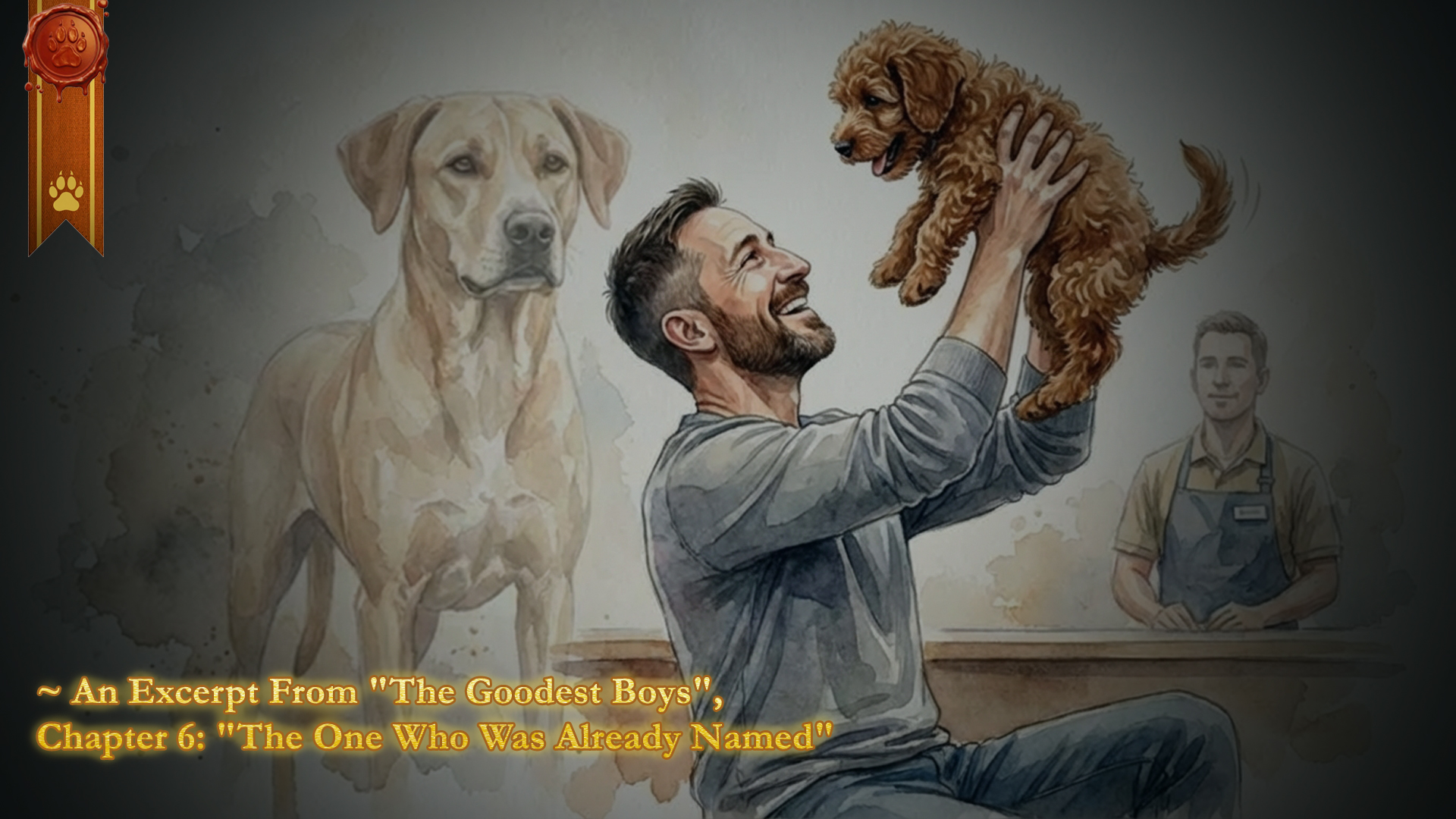
I walked in already knowing. Not hoping. Knowing. The staff moved through their routines, unaware that something sacred was about to occur. When the male attendant brought him out, I felt it immediately—Caesar gravitating toward me with an ease that felt intentional.
Before anyone could say anything, I lifted him high into the air, instinctively, reverently, like a declaration rather than a gesture, and said—without thinking, without effort,
“Hi, Caesar.”
The attendant froze. He commented on how calm Caesar was, how unusual it was compared to his interactions with others. I barely heard him. I was looking into Caesar’s eyes.
They were unbelievably soft. Loving. And unmistakably familiar.
Not identical. Not the same.
But resonant.
Caesar settled into me as if he already knew where he belonged. And in that moment, every question I hadn’t asked answered itself. This was not replacement. This was not denial. This was not projection.
This was continuation.
The name had never been a question. Lincoln and I used to watch the Planet of the Apes trilogy together. He paid attention in a way dogs aren’t supposed to. He watched Caesar—the ape—with something like reverence. Even then, I noticed it, though I didn’t yet know why it mattered.
Caesar meant strength. Leadership. Legacy. Becoming.
It meant a story that did not end where it was expected to.
Lincoln had named him, indirectly. Not through language, but through memory, attention, and the way love prepares the ground for what comes next.
Caesar was intentional. His arrival was intentional. The timing was intentional.
Six months after Lincoln’s passing—not sooner, not later. Long enough for grief to hollow me out. Long enough for the energy I carried to need release. Long enough for the space to be ready.
When I walked out with Caesar that day, I wasn’t healed.
But I was whole again in a way I hadn’t been since the moment Lincoln’s heart stopped beneath my hand.
I didn’t yet understand what this meant. I didn’t yet trust it fully.
But I knew one thing with absolute clarity:
This did not feel accidental.